02 — Pipeline pigging systems

Pig signaler LS2-TQZ / LS2S-TQZ

Reliable local or remote indication of a pig passing through a pipeline — installed on launchers, receivers and pipeline sections, in intrusive or non-intrusive designs.

01 — Product overview

Description

LINESIG Pig Signalers provide reliable local or remote indication of a pig passing through a pipeline. They are installed on pig launchers, receivers and pipeline sections to confirm pig movement during cleaning, batching, inspection and product-transfer operations.

The units are available in intrusive and non-intrusive designs, with mechanical, electrical or combined indication options.

Operating principle

When a pig passes the installation point, it activates the sensing mechanism. The signaler then provides a visible indication and, where specified, an electrical signal to a PLC, SCADA, alarm panel or control system.

02 — Design

Key features

  • Reliable pig passage detection
  • Bi-directional operation available
  • Local visual flag indication
  • Electrical switch output option
  • Manual or automatic flag reset
  • Intrusive or non-intrusive design
  • Adjustable trigger mechanism
  • Suitable for horizontal or vertical pipelines
  • Weatherproof and hazardous-area options
  • Simple inspection and maintenance

Main components

  • Pipeline mounting body
  • Trigger or sensing mechanism
  • Visual indicator flag
  • Reset mechanism
  • Electrical limit or proximity switch
  • Pressure sealing assembly
  • Protective enclosure
  • Mounting flange or threaded connection

03 — Available options

Specifications

Detection typeIntrusive or non-intrusive
Flow directionUni-directional or bi-directional
IndicationVisual, electrical or combined
ResetManual or automatic
Electrical outputLimit switch or proximity sensor
MountingFlanged, threaded or welded connection
MaterialCarbon steel or stainless steel
EnclosureWeatherproof or hazardous-area certified
InstallationHorizontal, vertical or inclined pipeline

Electrical & instrument options

  • Dry-contact switch output
  • Inductive proximity sensor
  • Local junction box
  • Adjustable switch arrangement
  • PLC, DCS and SCADA interface
  • Explosion-protected enclosure option
  • Cable gland and terminal accessories

Choose a type

Two ways to confirm pig passage

LINESIG Bi-Directional Pig Signalers are available in two indication arrangements — a purely mechanical option, and a mechanical + digital option for remote monitoring.

A
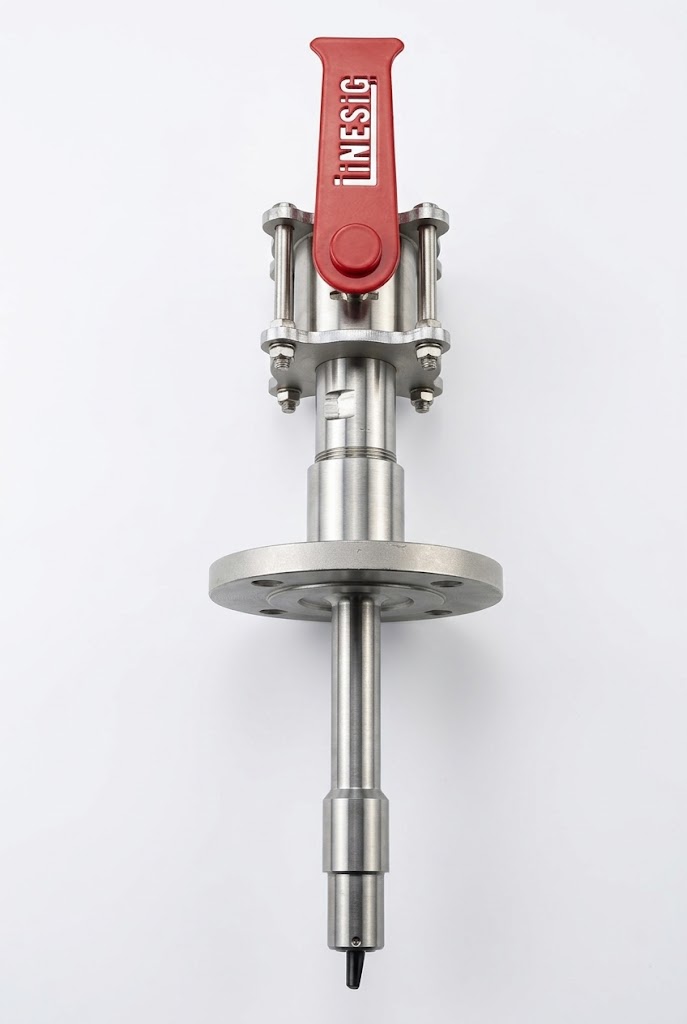
LineSig LS2-TQZ manual flag-type pig signaler with red flag and flanged probe

Flag type (manual)

Local mechanical flag indication. No external electrical power required.

Mechanical only Bi-directional
View type →
B
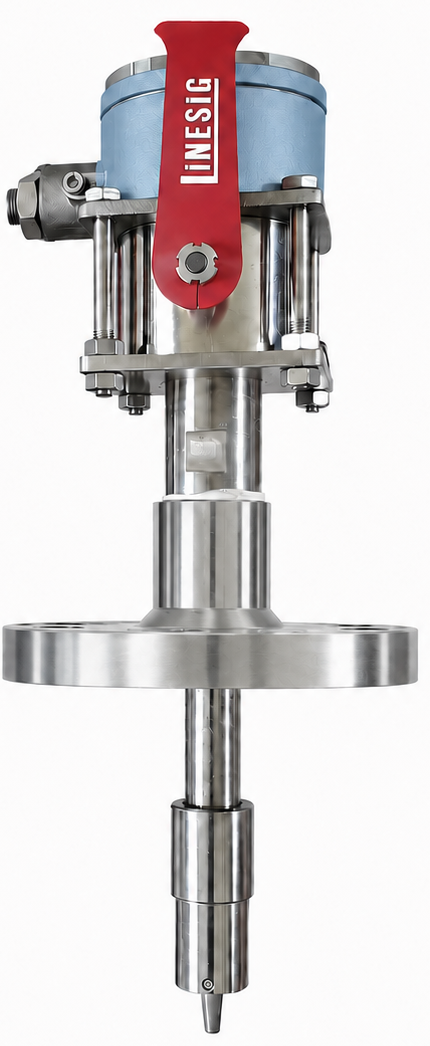
LineSig LS2S-TQZ dual-type pig signaler with digital output

Dual type (digital)

Mechanical flag plus a digital/electrical signal for PLC, SCADA or remote monitoring.

Flag + digital Bi-directional
View type →

04 — Where it's used

Typical applications

  • Pig launchers and receivers
  • Oil and gas pipelines
  • Crude-oil and refined-product lines
  • Water transmission pipelines
  • Chemical and petrochemical systems
  • Terminal and tank-farm transfer lines
  • Cleaning, batching and inspection operations
  • Automated pigging systems

05 — Standards

Engineering & compliance

  • ASME pipeline connection standards
  • IEC or ATEX hazardous-area requirements, where specified
  • NACE-compatible material options for sour service
  • Project-specific pressure rating and material standards
  • Client-defined inspection and testing requirements

Testing & documentation

  • Product data sheet
  • Dimensional drawing
  • Material certificates
  • Pressure test certificate
  • Functional test report
  • Electrical wiring diagram
  • Hazardous-area certificate, where applicable
  • Installation, operation and maintenance instructions

06 — Downloads

Documents

07 — Ordering information

What to send us for a quote

  • Pipeline size and schedule
  • Design pressure and temperature
  • Process fluid
  • Pig type and travel direction
  • Intrusive or non-intrusive design
  • Visual or electrical indication requirement
  • Electrical output and hazardous-area classification
  • Mounting connection and pressure rating
  • Material and corrosion-protection requirements